2026
Acid-Catalyzed Synthesis of C-6-Esterified Sugar Acceptors from Acetals/Ketals Using Esters as Acyl Donors
Org. Lett. 2026, 28, 8884-8888
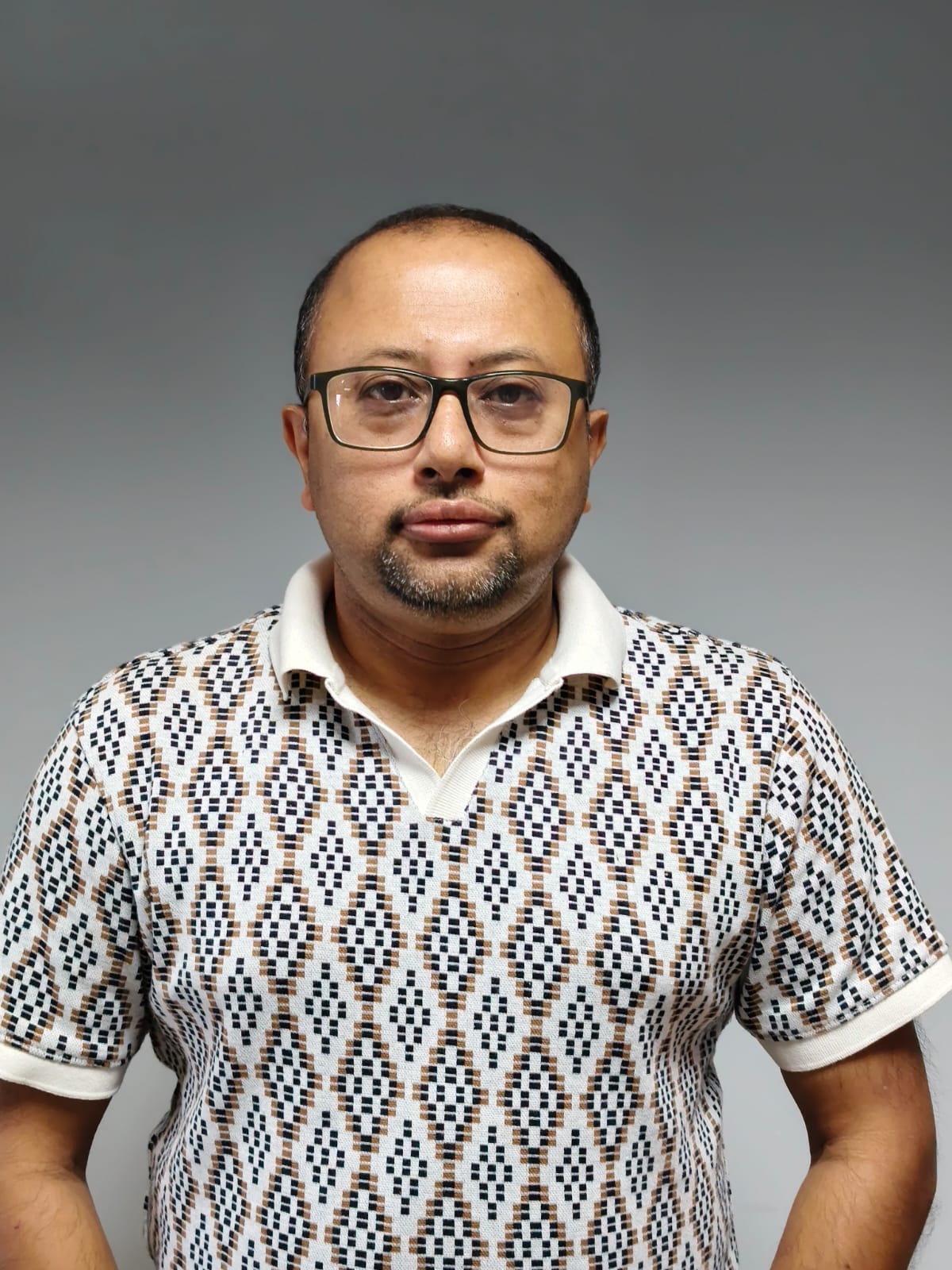





Synthetic carbohydrate chemist developing mild, one-pot glycosylation, nucleoside and photoredox methods, non-infringing routes to life-saving APIs (Molnupiravir, Dapagliflozin) and natural-product-inspired leads for cancer, infection and inflammation. Ph.D. (CSIR-IICB / Jadavpur University, 2006); formerly Principal Scientist and Head, CSIR-IIIM Jammu. Google Scholar: 2,971 citations, h-index 32, i10-index 80.
Prof. Debaraj Mukherjee is a Professor in the Department of Chemical Sciences, Bose Institute, Kolkata (since 27 December 2022). His group develops mild, sustainable methods in synthetic carbohydrate chemistry and applies them to nucleosides, glycomimetics, life-saving active pharmaceutical ingredients and natural-product-inspired drug leads.
He obtained his Ph.D. in Organic Chemistry (2006) from Jadavpur University for research carried out at CSIR-Indian Institute of Chemical Biology, Kolkata, after an M.Sc. (1999) and B.Sc. (Hons.) (1997) in Chemistry from the University of Calcutta. From 2006 to 2022 he was at CSIR-Indian Institute of Integrative Medicine (IIIM), Jammu, rising from Junior Scientist to Principal Scientist, and served as Head of the Natural Product Chemistry / Plant, Microbes & Bio-Organic Chemistry divisions. In 2011–12 he was a DST BOYSCAST Fellow with Prof. David Crich at Wayne State University, USA.
His work spans more than 100 research publications in journals including J. Am. Chem. Soc., Org. Lett., J. Org. Chem., Chem. Commun., Green Chem. and J. Med. Chem., five patents, and a CRSI Bronze Medal (2023). Google Scholar: 2,971 citations, h-index 32, i10-index 80 (November 2026).
Contact: Department of Chemical Sciences, Unified Academic Campus, Bose Institute, EN-80, Sector V, Bidhan Nagar, Kolkata 700 091 · debaraj@jcbose.ac.in · +91-33-2569-3293 (Ext. 395, 404) · ORCID: 0000-0002-2162-7465
Explore our research in 3D: View the interactive 3D Research Tour – rotatable molecular models of our APIs, nucleosides and drug-discovery leads.
NPC – Microbes
|
Medicinal Chemistry
|
Glycoscience
|
The group speaks the language of sugars: mild, one-pot strategies for orthogonal protection–deprotection and stereoselective bond formation in carbohydrate chemistry, applied to nucleosides, glycomimetics and life-saving APIs.
Explore our research in 3D: View the interactive 3D Research Tour – rotatable molecular models of our APIs, nucleosides and drug-discovery leads.
The group develops one-pot strategies in which an inexpensive, often metal-free reagent performs two orthogonal jobs in the same flask: I2 (acetalation + acetylation), Vilsmeier reagent (chlorination + formylation), cyanuric chloride/TCT (acetalation + esterification + reductive opening), TMSN3 (azidation + silylation), arynes (site-selective O-arylation) and simple esters (green primary acylation). These give orthogonally protected building blocks for branched, bioactive oligosaccharides.
Other methods include C-glycosylation (Fe/Cu/Zn-catalysed C-alkenylation, vinyl-azide chemistry), Pd-catalysed C-arylation and C-nucleoside synthesis, radical and photoredox chemistry, carbonylation using formic acid as a CO surrogate, and ring-conversion of sugar enol ethers to chiral aromatic, heteroaromatic and fused bicyclic cores.
A mildly protected ribose donor gives N4-hydroxycytidine en route to Molnupiravir (38% overall; US 2024/0239832 A1), and a stereoselective oxidative Mizoroki–Heck / syn-hydroboration sequence delivers aryl-β-glucopyranosides toward Dapagliflozin (IN202211009236). New economical green routes to 2′-C-fluorinated nucleosides and to the glycemic biomarker 1,5-anhydroglucitol have also been developed (patent filings in preparation).
SERB (GA-3111): N-alkylated hydroxylamino interglycosidic linkages from glycal epoxides toward esperamicin–calicheamicin cores (PI). Earlier: SERB-DST EMR/2016/004710 (affordable Dapagliflozin and Sofosbuvir), DST GAP-1145, and CSIR projects on COVID-19 antivirals, gliflozin/Sofosbuvir synthesis, biofilm-inhibitor nucleosides and the CSIR Sickle Cell Mission.
Core synthetic-chemistry infrastructure supporting the group's work, from low-temperature glycosylations to inert-atmosphere reactions.
Org. Lett. 2026, 28, 8884-8888
Org. Biomol. Chem. 2026, 24, 6075-6081
Chem. Commun. 2026
Review, 2026
ACS Symposium Series, American Chemical Society, Washington, DC, 2026, Chapter 7
Org. Lett. 2026, 28, 8884-8888
Org. Lett. 2026, 28, 8884-8888
Org. Lett. 2026, 28, 8884-8888
J. Org. Chem., 2025, 90, 47, 16902-16911
J. Biomol. Struct. Dyn., 2025, 43, 4564-4577
J. Org. Chem., 2025, 90, 10155-10163
NPJ Biofilms Microbiomes, 2025, 11, 184
In: Secondary Metabolites and Drug Discovery, 2025, pp. 327-344
Chem. Commun., 2025, 61, 137-140
Org. Biomol. Chem., 2025, 23, 3824-3829
Chemical Communications 61, 14161-14164, 2025
Carbohydrate Research 554, 109537, 2025
RSC advances 15, 26490-26496, 2025
J. Plant Biochem. Biotechnol., 2025, pp. 1-17
Chem. Eur. J., 2025, e202500882
Org. Lett., 2025, 27, 5491-5496
Chem. Commun. 2024, 60, 13040-13043
Org. Biomol. Chem. 2024, 22, 6941-6945
Chem. Commun. 2024
Elsevier Bioorg. Chem. 2024, 150, 10758
Synthesis 56, 1070-1096, 2024
Synlett 35, 635-648, 2024
ACS omega 9, 13982, 2024
In: Synthetic Strategies in Carbohydrate Chemistry, Ed. V. K. Tiwari, Elsevier, 2024, pp. 365-406
Bioorg. Chem. 2024, 147, 107379
RSC med. chem. 2023, 14, 2100-2114
Eur. J. Org. Chem. 2023, 26, e202300780
Chem. Commun. 2023, 59, 10448
Chemistry Select. 2023, 8, e202300578
J. Org. Chem. 2023, 88, 5676-5686
J. Org. Chem. 2023, 88, 8300-8309
Chem. Commun. 2023, 59, 9090-9093
J. Mol. Struct. 2023, 1286, 135568
In: The Role of Chromenes in Drug Discovery and Development, Eds. A. K. Dash, D. Kumar, Bentham Science, 2023
Mol. Pharm. 2023, 20, 4597-4610
IntechOpen book chapter
Chem. Biol. Interact. 2022, 365, 110093
Chem. Commun. 2022, 58, 7038-7041
Chem. Asian J. 2022, 17, e202200350
Mol. Divers. 2022, 27, 619-633
Chemistry Select. 2022, 7, e202201132
J. Org. Chem. 2022, 15, 1087-1092
Org. Biomol. Chem. 2022, 20, 1436-1443
Bioorg. Chem. 2021, 118, 105479
RSC Adv. 2021, 11, 36143
Org. Biomol. Chem. 2021, 19, 6353
Physiol. Plant. 2021, 172, 53-63
Eur. J. Med. Chem. 2021, 213, 113156
Journal of Liquid Chromatography and Related Technologies 44, 285-297, 2021
J. Pharm. Biomed. Anal. 2020, 113768
Eur. J. Org. Chem. 2020, 4408-4416
Org. Biomol. Chem. 2020, 18, 4174-4177
ACS Omega. 2020, 5, 9885-9891
RSC Med. Chem. 2020, 11,142
Chemistry Select. 2020, 5, 11272-11290
Curr. Pharm. Anal. 2020, 17, 2-9
Indian Journal of Pharmaceutical Sciences 82, 958-966, 2020
In: Carbohydrates in Drug Discovery and Development, Elsevier, 2020, pp. 481-519
In: From Ethnobotany to Ethnopharmacology, New India Publishing Agency, New Delhi, 2020
Asian J. Org. Chem. 2020, 9, 882-897
RSC Adv. 2019, 9, 22227
Breast Cancer Res. Treat. 2019, 177, 307-323
Bioorg Med Chem. Lett. 2019, 29, 126750
Org. Lett. 2019, 21, 3034-3037
Org. Lett. 2019, 21, 3038-3042
Bioorg. Med. Chem. Lett. 2019, 29, 1007-1011
ACS omega 4, 20435, 2019
Anti-Cancer Agents in Medicinal Chemistry 2019
Org. Lett. 2018, 20, 4036-4039
Org. Biomol. Chem. 2018, 16, 2666-2677
Mol. Carcinog. 2018, 57, 1102-1115
Org. Lett. 2018, 20, 1572-1575
Eur. J. Med. Chem. 2018, 150, 419-445
Natural product research 32, 1751-1759, 2018
Org. Lett. 2017, 19, 4936-4939
Sci. Rep. 2017, 7, 13749
Oncogenesis, 2017, 6, 341
Carbohydrate Research. 2017, 438, 1-8
Trends in Carbohydrate Research 2017, 9, 1-13
Chemistry select. 2016, 1, 6553-6557
Org. Biomol. Chem. 2016, 14, 9989-9992
Synth. Commun. 2016, 46, 902-908
ChemistrySelect. 2016, 1, 1954-1958
ChemistrySelect. 2016, 3, 567-571
J Biomol. Screen. 2016, 21, 342-353
ChemCatChem. 2016, 8, 703-707
Sci. Rep. 2016, 6, 18800
RSC advances 6, 75960-75972, 2016
Molecular Carcinogenesis 55, 864-881, 2016
Org. Lett. 2015, 17, 4624-4627
Org. Lett. 2015, 17, 3742-3745
Eur. J. Org. Chem. 2015, 459-462
Autophagy. 2015, 11, 314-331
J. Am. Chem. Soc. 2015, 137, 10336-10345
Chem. Biol. Interact. 2015, 232, 58-67
Eur. J. Org. Chem. 2014, 7333-7338
Eur. J. Med. Chem. 2014, 85, 727-736
Tetrahedron Lett. 2014, 55, 5846-5850
Org. Biomol. Chem. 2014, 12, 7900-7903
RSC Adv. 2014, 4, 37908-37913
RSC Adv. 2014, 4, 11023-11028
Tetrahedron. 2014, 70, 1133-1139
Med. Chem. Res. 2014, 23, 1643-1653
RSC Advances 4, 43241-43257, 2014
Chem. Biol. Interact. 2013
Chem. Commun. 2013, 49, 11409-11411
Chem. Commun. 2013, 49, 10154-10156
RSC Adv. 2013, 3, 19899-19904
Carbohydr. Res. 2013, 381, 142-145
J. Med. Chem. 2013, 56, 6122-6135
Tetrahedron. 2013, 69, 5517-5524
RSC Adv. 2013, 3, 11450-11455
RSC Adv. 2013, 3, 2211-2215
Adv. Synth. Catal. 2012, 354, 1933-1940
Org. Biomol. Chem. 2012, 10, 5357-5360
Med. Chem. Commun. 2012, 3, 1082-1091
PLoS One. 2012, 7, 44039
Org. Biomol. Chem. 2012, 10, 9090-9098
Indian J. Chem. B 2012
Lett. Drug Des. Discov. 2012, 9, 263-275
Org. Lett. 2011, 13, 576-579
Steroids 2011, 76, 1213-1222
J. Carbohydr. Chem. 2011, 30, 61-74
Synth. Commun. 2011, 60, 3876
Indian J. Chem., Sect. B 2011, 50B, 1619-1629
Green Chem. 2010, 12, 1568-1572
J. Org. Chem. 2010, 75, 3097-3100
Nat. Prod. Med. Chem. 2010, 1, 368-391
Org. Biomol. Chem. 2009, 7, 1280-1283
Arkivoc 2009, 4, 241-251
Tetrahedron Lett. 2009, 50, 6236-6240
Org. Lett. 2008, 10, 4831-4834
Tetrahedron Lett. 2008, 49, 4944-4948
Tetrahedron: Asymmetry 2008, 19, 1898-1903
J. Org. Chem. 2007, 72, 8965-8968
Tetrahedron Lett. 2007, 48, 663-667
J. Carbohydr. Chem. 2005, 24, 251-259
Tetrahedron 2001, 57, 7701-7704
Encyclopedia of Reagents for Organic Synthesis, Wiley
Book chapter

Chemical Sciences
rahulhaldar386@gmail.com

Chemical Sciences
bapachemflix@gmail.com

Chemical Sciences
sancharik6@gmail.com

Chemical Sciences
2570ghoshamit@gmail.com

Chemical Sciences
zernainsana@gmail.com

Chemical Sciences
meaditidas45@gmail.com