New CRISPR technology can help plants outsmart heat and disease
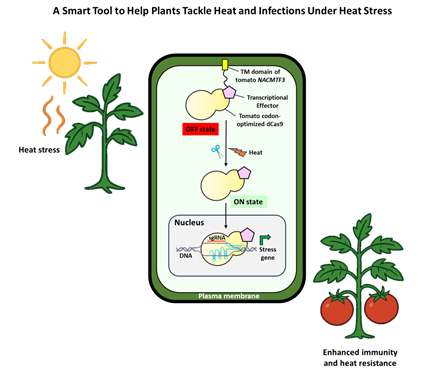
A smart molecular tool developed by scientists can aid plants facing rising temperatures and infections. Plants often feel stressed, especially when the weather is extreme or microbes attack. When they’re stressed, their productivity decreases. Searching for solutions that can help plants get smarter about defending themselves, researchers from Bose Institute, an autonomous institute of the Department of Science and Technology (DST), found an answer in CRISPR (Clustered Regularly Interspaced Short Palindromic Repeats). CRISPR tools usually work like scissors that cut DNA to create lasting changes. However, Prof. Pallob Kundu and his team used a modified version called dCas9. This version does not cut DNA. Instead, it acts like a switch that can turn genes on or off. The switch stays off until the plant experiences stress. To develop the tool, the scientists borrowed a clever part from the tomato’s own biology—a small piece of a natural protein called NACMTF3. This part, called the TM domain, works like a tether and keeps the dCas9 switch locked outside the control room (nucleus). But when under stress, for example, due to heat, the TM domain lets go off the tethering function. In a moment, the switch is released and moves into the control room, flipping on the genes that help the plant defend itself.
link text PIB
Month Year : July - 2025
link text PIB
Month Year : July - 2025