New milestone in indigenous development of gaseous detector important for mega science FAIR project in Germany
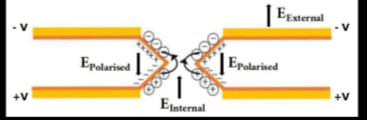
Researchers have developed an innovative technique using a radioactive source that can simplify the study of radiation effects on Gas Electron Multiplier (GEM) detectors, a crucial step in nuclear and particle physics experiments. Gas Electron Multiplier (GEM) detector are particle detectors used as tracking devices in high-energy physics experiments that utilizes a thin, perforated foil with a high electric field to amplify particles produced by ionizing radiation, allowing for precise detection of particles like muons by significantly multiplying the initial signal generated by the particle's interaction with the gas within the detector. They are also strong candidates for diagnostic applications in medical technology because of their good position resolution. First introduced by Prof. Fabio Sauli in 1997, GEM detectors consist of a 50 µm thick Kapton foil, with 5 µm copper cladding on both sides. Despite their advantages, the inclusion of Kapton, a radiation-resistant polyimide film with excellent insulating properties, in the active volume makes these detectors sensitive to radiation-induced effects, particularly the charging-up of the dielectric medium. During operation, ionizing radiation deposits energy into the detector, initiating electron avalanche formation. Details: https://www.pib.gov.in/PressReleasePage.aspx?PRID=2100715
link text DST link text PIB
Month Year : February - 2025
link text DST link text PIB
Month Year : February - 2025