Study by Bose Institute scientist Challenges Longstanding Dogma of Bacterial Gene Regulation
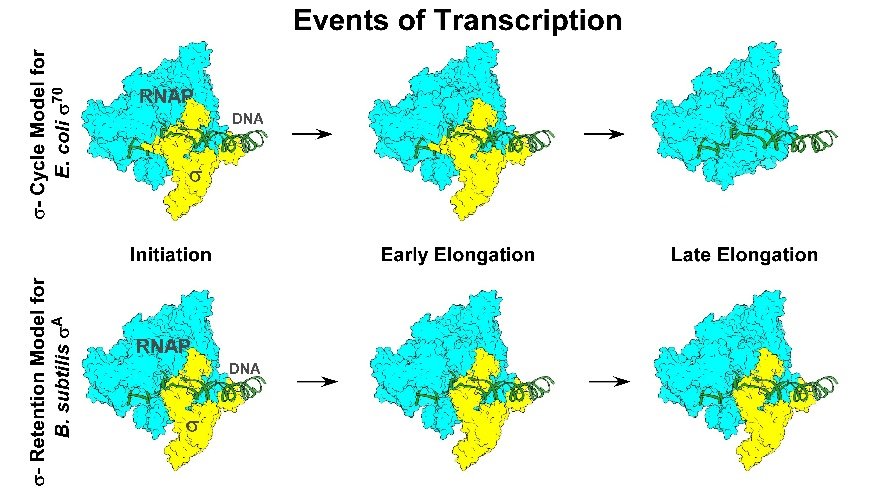
A new study published in the Proceedings of the National Academy of Sciences (PNAS) overturns a central textbook model of bacterial gene regulation. Researchers from the Bose Institute and Rutgers University report that, contrary to decades of scientific belief, the principal transcription initiation factor in Bacillus subtilis—sA—and a modified version of the Escherichia coli s70 factor remain bound to RNA polymerase throughout transcription, rather than being released after initiation. For nearly 50 years, the so-called “s cycle” model has proposed that s factors bind RNA polymerase to initiate transcription and then dissociate to allow elongation. This concept was built largely on observations of E. coli s70. However, the new findings reveal that the cycle is not a universal phenomenon. Prof. Jayanta Mukhopadhyay from the Bose Institute, whose lab works on understanding the fundamental mechanism of transcription and gene regulation in bacteria, is the lead author of this study, doi:10.1073/pnas. 2503801122. The central dogma of molecular biology depicts the unidirectional flow of genetic information from DNA to RNA to protein. In this essential process for life, the information encoded in the DNA (gene) is transcribed into RNA as the messenger carrying instructions, which is finally translated into proteins that carry out the cellular tasks. This flow occurs through DNA replication (DNA to DNA), transcription (DNA to RNA), and translation (RNA to protein). Click for details
Month Year : September - 2025
Month Year : September - 2025