Study introduces a toxicity standard of ultrafine aerosol (PM2.5) pollution over Kolkata megacity
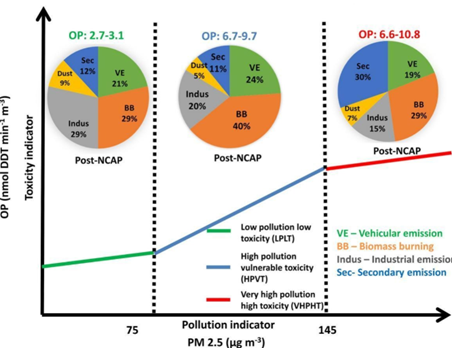
A new study conducted in Kolkata shows that the toxicity value of PM2.5 experiences a sudden jump when the pollution reaches around 70 µg m-3. PM2.5, or particulate matter with a diameter of 2.5 micrometers or smaller, is a significant air pollutant posing serious health risks, including respiratory and cardiovascular problems, and is a key indicator of air quality. The Government of India has taken several initiatives and policy measures to combat air pollution and the latest is the National Clean Air Program (NCAP) launched in 2019 by the MoEFCC. The programme is focused on the reduction of particulate matter by 40 % by 2026 with respect to 2017 through strategies and action plans for 131 non-attainment cities (not attaining the National Ambient Air Quality Standard of India) in India for different states. Kolkata has been identified as one of such cities in India. Bose Institute, an autonomous research institute under Department of Science and Technology, Govt. of India which has been given the responsibility to act as the Nodal Institute to work towards the mitigation of air pollution over this city and also to act as a national knowledge partner under the NCAP, studied the toxicity of atmospheric aerosols over the atmosphere of Kolkata. Prof. Abhijit Chatterjee and his former Ph.D students Dr. Abhinandan Ghosh and Dr. Monami Dutta also explored how the degree of the toxicity changes with the increase in total aerosol pollution load and have studied the oxidative potential (OP) of ultrafine aerosols (PM2.5) or the potential of forming the reactive oxygen species (ROS) that are introduced to the human lung cells via inhalation of particles. The enhanced presence of the reactive oxidative species makes the natural antioxidants of human cells incapable of counteracting, leading to oxidative stress in cells. Link: https://dst.gov.in/study-introduces-toxicity-standard-ultrafine-aerosol-pm25-pollution-over-kolkata-megacity
link text DST link text PIB
Month Year : April - 2025
link text DST link text PIB
Month Year : April - 2025